
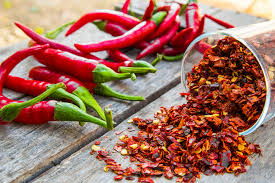
Chile peppers belong to the genus Capsicum, which is the namesake of the formidable bioactive that carries the heat, capsaicin. The bright red, yellow, and green colors of chile peppers also alert you to the presence of bioactives like zeaxanthin, lutein, and beta-carotene, which each have their own biological activities. Capsaicin activates the immune system and has been shown to increase the numbers of circulating white blood cells and antibody-producing B cells.
“Scientists at the University of Connecticut studied the effect of capsaicin on the immune responses specific to cancer. In the lab, mice with fibrosarcomas, a type of aggressive tumor, received capsaicin injections. Their tumors either stopped growing or, in some cases, shrank completely and disappeared. When the scientists examined under the microscope what was left of the cancers, they saw the capsaicin-treated tumors had forty-two times more dying cells than tumors that had not been treated with capsaicin. They found the response was consistent with immune killing of cancer.
“The scientists studied how capsaicin engages the immune system in mice with growing colon cancer. They found capsaicin activates the immune dendritic cells, which actually have specific receptors for capsaicin. Similar to a key fitting into a lock, the capsaicin turned on the immune cells. Again, when the mice were treated with capsaicin, tumor growth dramatically slowed. The capsaicin stimulated the immune system of the mice to produce cytotoxic T lymphocytes that would kill cancer cells.
“While these experiments delivered capsaicin as an injection into the tumor, they demonstrate that a chile pepper bioactive has the power to activate and weaponize the immune system against cancer cells. To appreciate the potency of capsaicin used in these mouse experiments, the scientists used only two hundred micrograms of capsaicin for each treatment. This is the equivalent amount of capsaicin found in one-fifth of a habanero pepper.”